Friday, 5 July 2024

Home straight

I'm in the last leg of my Chinese adventure and back in Hong Kong after a week teaching in Zhuhai at Beijing Normal University, a weekend visit to old friends from Vladivostok who now live in the northern Chinese seaside city of Dalian, and a short stay in Guangzhou to play table tennis (badly) with a Manchester colleague.  Everything has been lovely - the students were wonderful (I'll write about that later), Dalian is the most beautiful place (I had a real holiday there), and I managed to learn how to negotiate the noise of Guangzhou (that doesn't have any of the charm of Dalian). On Saturday I give a "masterclass" on AI and management at Manchester University's spectacular centre in Hong Kong (will post a picture of the view - it's amazing). I've been to Hong Kong for two years now - it is a jewel of a city. Everything's wonderful - or at least, it would be if I hadn't put my back out. 

Unfortunately, as a reminder to me that I'm not as young as I used to be, just sitting on the sofa in my flat in Zhuhai was enough to twist something that put me in agony! I could barely move, screaming in pain (there's no one around, so I let rip!). Then I lugged my huge suitcase on to the bus across the bridge back to Hong Kong. I'm reasonably ok providing I don't sit down. Which is unfortunate because I do like to sit down occasionally. It's a bit better today.. and hopefully better still by Saturday when I give the masterclass. I'm going to a concert in Hong Kong city hall on Saturday night (Berg Violin concerto and Brahms Piano Quartet arranged by Schoenberg). And that will be it. 


Then I need to sit in a chair for 14 hours to get home. It'll be fine... Travelling is so exciting, but reality has a funny way of biting you on the arse... or the back.

Friday, 28 June 2024

Being one with multi-dimensionality

In response to a philosophical (or maybe existential) question a friend recently asked me, I think we exist in many dimensions at once. That means that one can have confidence that we are both always in the same place and different places at the same time. 

AI can draw this... Perhaps like this...


Wednesday, 26 June 2024

Caring in 3D

Being thousands of miles away in a country about which I understand very little makes me think more of home and about those who understand me best. With communication difficulties of being in china, the fluency and continuity of communication can get lost. And I have been very busy. But not too busy to think "God, I miss you!" That's an important thought. What I am missing is the deep connection of mutual understanding. It's quite nice to be a two-dimensional figure in an exotic environment sometimes. But the real thing is at home. Over the last few weeks - well, a couple of months or so - I've been a bit 2D. I want to be 3D again!

Tuesday, 25 June 2024

Zhuhai curiosity

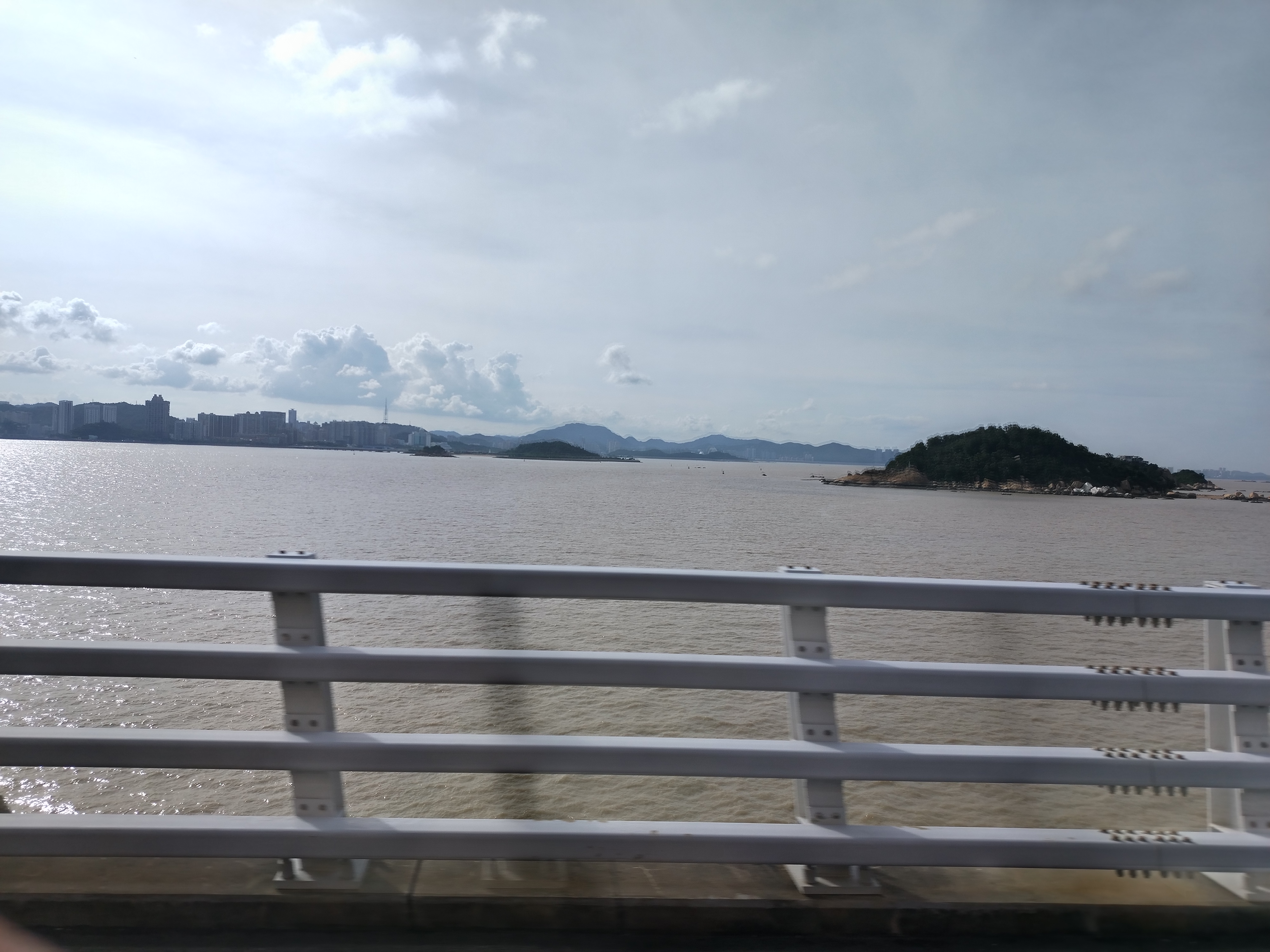
It's raining warm rain. But I've replaced my Manchester coffee shop with a Chinese coffee shop. It's funny how little we need to feel relatively at home anywhere in the world! What would I do if I didn't have my computer and all my work carried with it? It's hard to imagine how the world has changed. A couple of days ago I was in the middle of the sea on the Hong Kong to Zhuhai-Macao bridge...

One of the things that is striking me about this visit is the extent to which things are changing, and will change further in the wake of technology. I've often been accused of being over-enthusiastic to claim revolutions in education. But I'm finding the mood here a bit downbeat - people are tending to say "Nothing will change. Education will remain (basically) Victorian.", perhaps on the grounds that the internet didn't change education - apart from making it more bureaucratic. And perhaps the regimentation and bureaucracy of Chinese education (and education worldwide) is a sign of that (where did they get that idea of how to organise education from? - Learning outcomes and assessment criteria have become a kind of global disease).

But that is really what has changed. Education has scaled-up and become more bureaucratic and more regimented than it was 40 years ago. Technology facilitated upscaling of universities, but at the price of the quality of intellectual relationships that could be supported by the system. Or rather it created scarcity of high quality relationships, for which students believed they had to pay a premium and pass exams to gain access. 

I fear that for the majority of academics now working in universities, academia is not about ideas, but about assessment criteria, exam boards, publishing papers, and marketing. Intellectual development, criticism and challenge have retreated. All of this is because the system cannot handle the variety that is presented to it. When the internet came along, it was seized upon as a means of attenuating the variety of learning, rather than handling it in different way - so surveillance and massive amplification became the norm. "Personalisation" became about algorithmic adaptation to the institution's "scheme", not about curiosity and personal inquiry. 

So now we have very high variety, personal technology which doesn't even need the internet (AI). How will institutions deal with this? How will individuals deal with it? Of course, institutions can still brainwash students to believing that their success in life depends on compliance to the institution's scheme. But it really is brainwashing, and strong-minded bright young people will see through it, I expect. Maybe this new technology will be enough to encourage students to see through the institution's game. 


But then maybe it will be hijacked by powerful actors in institutions who seize an opportunity to make a quick buck. Those people are always around. I was asked in China about creating a bot for the university department. My heart sank. I noticed the university of Hong Kong has bot too. I would have hoped they'd know better! There's a grimness to all this. And frankly, the world is grim enough without this. 


There are sparks of interest in deeper things from my students in China. It's hard for them because there are expectations they have of education, and I'm breaking the rules a bit. But they are bright and they are thinking. It's all about the relationships and their curiosity. 

What is the curiosity about? It's the same thing that happens when we fall in love. That's why curiosity evades explanation. In fact I think sometimes we see that students fear asking deep questions because they have a sense of trepidation about treading on sacred ground, or venturing into an unknown relationship. It's not because they're stupid. Their reaction is entirely authentic - but the technology might help them to find a path. And then there are moments of serendipity when things just fall in place. What are those moments? They are moments of harmony in the universe. We might talk of planetary alignments (Sun, Venus, etc) as if its a kind of magic, but many quantum physicists will insist on the importance of harmony. We see this in our relationships, and in the way we pursue our curiosity and learn new things about ourselves and each other. 

Sunday, 23 June 2024

Nuanced Global Education

I'm at Beijing Normal University's Zhuhai campus. It's incredibly hot and humid, and I'm preparing for classes which I will give over the next 5 days. It's an opportunity to try things out, particularly with a large group of students whose interests are fundamentally in education. The course is about interdisciplinarity and AI, and very closely related to the course I set up at the Far Eastern Federal University in Vladivostok a few years ago.

The real change AI could bring to education is a massive increase in the ability to handle the variety of individual differences and interests. Variety, or the inability to handle it, is the principal reason why education is not very good a lot of the time. Institutions are basically heavy attenuators of variety. AI could change that. But will we let it?

I have a number of tools to help me explore this. The first is an "expert generator" - choose a topic and it will introduce you to an "expert" with whom you can explore that topic. So what topics really interest you? Bitcoin mining? Dog grooming? Drug rehabilitation? Stress? The challenge will be to get students to open up about what they're really interested in.

I've got other tools for exploring how working practices will change. Things becoming more compressed - workflows collapsing. And there is the whole business of science and expertise and learning. If I can get a transcript of a YouTube video of an eminent scientist presenting their work, and I can load the transcript into an AI, and then ask the AI to explain it to me, do we need teachers? I had a fascinating discussion with AI about this question today, particularly discussing whether AI could do what Yves Chevallard calls "didactic transposition" (i.e. turning scientific discourse into teachable knowledge). AI can do this, but (the AI pointed out), its explanation may miss the "nuance of understanding". True. But then when do we teach teachers to reveal their nuanced understanding?? We have taught them to "deliver" - how many teachers even in universities have a nuanced understanding of what they teach?

We will finish the session by getting the students to act out a drama (generated by AI) around a future education scenario. I did this with 200 students last year. It was great fun. Drama is a very powerful tool - we should use it more across the curriculum. How could you do a drama in physics? (Remember Mr Tompkins, anyone?). What about chemistry? Or maths?

Nuanced understanding is lived experience, and in many ways it is "dramatic". My music professor Ian Kemp had it. He once explained why Bartok wrote one of his quartets. "This is why!" he said as he put up an acetate of a photograph of a woman. "The first thing to say is..." - there was a pause - "what remarkably good taste he had!". He knew what made the world go round, and that would get our attention. But it's not in any textbook. It's in the way we do things. I have to convey this kind of nuance this week. I have to convey that the underlying principle of the universe is love. It's the hardest thing to do. Especially if you're meant to be talking about AI!


Wednesday, 19 June 2024

China

So I'm on my way. CX256 in fact. And it's a beautiful day. I had to pop in to the office this morning to pick up a couple of gadgets which I want to take with me. Even turning up early in Manchester means interesting people to talk to. So an early morning conversation about Goethe and Pierre Bourdieu with the person who has part-organised my trip, and a brief conversation with my wonderful office companion. I've just applied for a new job in a different faculty - but I really like where I am, even if I'm "hiding" as an academic. I'll also see my daughter briefly in London before I go to Heathrow. These things are important. It's all heart stuff really (even Goethe!)

When I'm in china, I will meet with old friends and colleagues from Bolton, as well as meet with a Manchester colleague in Guangzhou to play table tennis. That'll be fun! And maybe a trip to Dalian to see a Russian friend. 

The world is in so much trouble right now. I'll return to the UK to a new government that will face a lot of problems. But... the heart stuff! I'm tempted to say "think about the heart stuff"... But really we just need to feel it.

And talking of heart, here's the next stage of my journey. Pub lunch in Euston with Izzie..


Having a bit of a giggle about her destruction of a piano 16 years ago...


Tuesday, 18 June 2024

Brain Stuff and Heart Stuff

Being cerebral is an academic affliction. Being in touch with emotions, speaking from the heart, is not something that comes easily to academics. This may be because brain-stuff resides in words which can be codified, and used (sometimes as weapons) in articulating and defending ideas. Heart-stuff has to be experienced, and sometimes it hurts. Nobody likes to be hurt, and so we tend to inoculate ourselves against heart-stuff in favour of brain-stuff, which is where the academic affliction begins. Freud would call it "sublimation". Even Freud's label is brain-stuff rather than heart-stuff.  

I'm about to travel to China, and I'm reminded of the last international trip I made to Morocco a couple of months ago. I came back emotionally hurt in a way that hasn't happened for a very long time. I wasn't alone in experiencing pain, which made it worse. I'm naturally apprehensive about this trip, although I'm sure it will be fine, and I like China. I'm returning to Beijing Normal University's Zhuhai campus to deliver a course on "Non-Linear Learning" (it's really about AI), and then to Manchester's academic centre in Hong Kong to deliver a masterclass on AI and Cybernetics. The masterclass is deeply related to my Morocco experience. I need to think of a way of making it "sing" - so I'm taking my Roli Seaboard as a pedagogical tool. 

One thing that I've reflected on in recent weeks is that heart-stuff may be very uncomfortable, but it is extremely important to experience and be reminded of the central importance of our emotions. It is in fact a privilege to experience it and I am "lucky" to feel the pain. It's all a bit like Orpheus's severed head floating down the river Hebrus, refusing to stop singing. It would be far worse to succumb to emotional inoculation and live merely cerebrally - then the singing stops. 

Academics don't sing enough. This is probably why they get into silly battles with each other about concepts that few understand. The "Cyprus experiment" in Brave New World is the classic example - the experiment by a utopian society to gather the most brilliant minds on the island of Cyprus to create an intellectual powerhouse. What happened? Civil war - they all killed each other.