Thursday, 31 August 2017

Medieval Logic, Cybernetics and the art of D.P. Henry

It's a curious thing that I was talking with a friend about curiosity yesterday, a couple of weeks after visiting the British Library and spotting in the display cases a copy of Boethius's "De Institutione Arithmetica" which contained a beautiful picture of the categorisation of number into arithmetic, geometry and harmony. With no apology, I would say that the "harmony" struck a chord with me! There's something about curiosity and "striking a chord" - or rather, looking for a chord to be struck.

I've recently been immersing myself in physics and symmetry, and was about to attend a conference which included contributions from physicists and cyberneticians. What I wasn't expecting was to be presented with very powerful alignments between medieval logic and cybernetics. The presentation by Dino Buzetti sent me off to look for the common patterns between Scotus, Ockham and George Spencer-Brown. What's the key? It's the obsession with what it is to make a distinction.

Dino's references also led me to seek out the work of D.P. Henry. Henry was one of the leading authorities on medieval logic. The epigraph he chose for his book on "Medieval Logic and Metaphysics" from St. Anselm could have been written by many cyberneticians (and particularly by Bateson):

We ought not to be
held back by the way
in which the improprieties
of speech hide the truth,
but should rather aspire
to the precision of the
truth which lies hidden
under the multiplicity
of ways of talking (from De Casu Diaboli)
I'm still digging into the book, but this statement from Anselm seems to me to also be about curiosity: it is a search for the multiplicity of ways of talking.

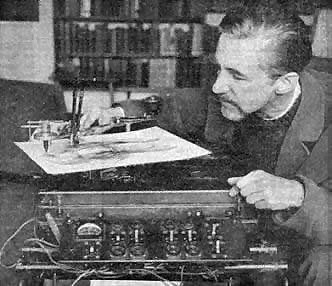
Henry is less famous today for medieval philosophy than he is for art. He was a champion of machine-generated art, and produced beautiful images like this one:


Sunday, 27 August 2017

Squander, Universities and George Holmes's Yacht

The recent car-crash interview given by George Holmes of the University of Bolton to the FT, repeated by other mainstream press (e.g. here: http://www.dailymail.co.uk/news/article-4751536/Boss-earns-222k-says-vice-chancellors-not-paid-enough.html) was deeply unsettling and unwelcome to many in the sector (for example, Oxford's David Palfreyman here: http://www.telegraph.co.uk/education/2017/08/03/stop-gravy-train-oxford-bursar-says-attacks-university-vice/. It was hard to work out if Holmes intended to stick two fingers up at the establishment, or he was wanting to parade his Bentley and yacht in front of them as a way of saying, "Well, it may only be in Bolton, but I can cut it with you posh lot!". He seems to flip-flop on this: on the one hand appointing minor royals to ceremonial positions in the University, whilst claiming that the old established universities like Oxford are "dinosaurs waiting to die". The latter comment he made in a TED talk (!) recently at a TED event organised at Bolton at which three senior managers and a few professors (it's very hard to tell the difference between professors and senior management these days) gave the world the benefit of their wisdom. This is worth watching here  https://youtu.be/6vyGqh13J58?t=8570 to gauge the intellectual clarity with which Holmes grasps his mission. It's not, I think, pedantic to note that the Robbins Report on Higher Education was published in 1963. The total self-confidence with which Holmes says it's 1966 and riffs on "route 66" says a lot about him: it's as if he's thinking, "if I say it loudly enough, I can make it true". It would make one question many of his other boasts and indeed his judgement. We see this in the world a lot at the moment.

To the people of Bolton, the obvious point is that Holmes's "success" - his yacht, the Bentley, and his £960,000 house - have been paid for by the university's students (many the children of Bolton) with money they haven't yet earned, and with a debt which will be hanging over them long after his yacht has sunk and the Bentley is at the crushers. He will say (and has), "This is a multi-million pound business". But one might be forgiven for thinking "This is a multi-million pound racket", the product of misguided government policy which turned universities into fiefdoms and put characters like Holmes at the helm without any checks and balances on their behaviour. The fact is, after numerous uncomfortable engagements with the press and previous bad behaviour (see http://www.dailymail.co.uk/news/article-2964002/University-vice-chancellor-handed-1m-bridging-loan-employers-home-47-miles-away-campus.html), HE'S STILL THERE. Is it imaginable that the VC of Oxford would survive this kind of thing? I doubt it. Holmes has been able to arrange things to suit him - at the students' and staff's expense. How long will this last?

The FT interview was, by any measure, very poorly judged. It was on a Phillip Green/Mike Ashley/Donald Trump level of "bringing the institution into disrepute" behaviour. I suspect Holmes knows this - but for some reason he can't seem to stop himself. The weird thing here is that he knows he can get away with it. The interview was reckless, irresponsible. It was squanderous - as indeed was the Bentley, the yacht, the £100,000 awayday, the £960,000 house, the sacking of the UCU reps, and so on. It was like some drug and alcohol fuelled bender of the kind that would make de Sade blush. It carries the whiff of the thrill it probably gave him as he posed for the centrefold of the FT (ok, it wasn't the centrefold, but it could have been). Playboy next. Dangerous?! "Yeah, but I'll get away with it."

Amid the austerity agenda, squander doesn't get much of a look in. But it's everywhere. George Bataille wrote an entire economic theory around the concept of squander and waste: he argued that in human history, it was the most regular punctuating mark in civilisation: war and destruction, extravagant building, luxurious art, sexual excess, alcohol and drugs, all the way through to the human sacrifice of ancient civilisation. Bataille put it down to humans having absorbed "excess energy" from the sun, and needing to expend it in various ways. He based his ideas on the anthropological theory of Marcel Mauss who explored gift economies and the "potlatch".

There is a weird symmetry between the squander of Holmes and the squander by students going to his (or other) Universities. Since fees were introduced, university funding has quickly revealed itself to be a "Veblen good" - where the demand for something increases with its price. Veblen I suspect subscribed to a similar theory to Bataille - he regarded University as "atavistic", and had a notorious reputation for seducing the wives of Vice-Chancellors. For the students, University is squander which the government encourages. It's actually a form of Keynesianism: what Colin Crouch calls "Privatised Keynesianism". £50,000 of debt for a piece of paper! Wow! That feels fantastic!

All intellectual life has an aspect of squander. At its best it's like the squander of the artist, or perhaps the squander of the priest who lives in self-imposed poverty. As intellectual accomplishment also carries a social status (What Veblen acerbically says is where "the standing of the savant in the mind of the altogether unlettered is in great measure rated in terms of intimacy with the occult forces") there is always a 'marketing' opportunity to sell the "fairy dust". The market has taken all of these forms of squander and turned them into an economic dynamic where student squander is matched by the squander of the likes of Holmes, and the unpleasant corporations making a killing on student accommodation and other services, and the banks who are ramping up interest on student fees.

Catherine Bennett touched on this in her excellent Guardian piece about Holmes, asking what would happen if it all doesn't work:
"What will motivate our young people, supposing we accept the Holmes analysis, if they do not see how good jobs translate into high-end vehicle choices? How else will leaders like him advertise their very successful careers? There can be only one possible compensation for this loss: more money" (see https://www.theguardian.com/commentisfree/2017/aug/05/boys-bragging-about-their-big-cars?CMP=share_btn_fb)
Is this sustainable? Can it carry on growing? Let's see more waste from students, and more outrageous peacock displays by the likes of Holmes! But this is an age of "austerity"! How does any of this make sense?

It's not an age of austerity. It's an age of squander. It's an age where a few like Holmes squander on Bentleys and yachts, whilst students squander on education. In the middle are the teachers and academics - the people with no time, let alone the money, to squander. That's the other side of Holmes's squander: slashing staff, hourly paid contracts, no security. This is the students' future. Bataille might suggest that we've reinvented human sacrifice.


Thursday, 24 August 2017

Uncertainty, Universities and Yacht-owning Vice-Chancellors

One of the greatest sources of confusion concerns the impact of technology on social change. When we survey history, we see patterns which appear to suggest that steam power caused the industrial revolution, and the various social and political transformations which accompanied it.  Obviously, online shopping needed the internet; the collapse of the high street could also be seen to be collateral damage from this, as was highlighted in this interesting (and rather depressing) piece about Bolton this week: https://www.theguardian.com/cities/2017/aug/23/bolton-response-market-city-decline. But this causal connection between technology and social change is what is called "technological determinism" - and it clearly isn't true. Yet because a causal link between technological innovation and social change is constructed, a mindset sets in within institutions like universities and government which sees that the solution to social problems like housing, welfare, employment or health is technological innovation.  But it tends to produce new problems rather than solutions.

We need a new theory which connects technological innovation to social change. I've begun to think that we look at the wrong things if we examine what new tools can do - what psychologists call their "affordances". Rather than doing this, there is a simpler starting point: all new tools provide new ways of doing things. That is, basically, the definition of a tool: it creates a new option for acting.

Today we are continually bombarded with new options for acting: new online communication services (FaceTube), new ways of cutting mobile phone bills (LebaraFone), new ways of getting about (UberLyft), and so on. Our daily conversations often go something like "I use x, it's new - have you tried it? Much better than y".

There are a number of things about options which need to be considered. Any option has to be selected. We use all kinds of techniques for making selections - habit is the most powerful one - but the trouble of deciding on an option is work. David Graeber calls this "imaginative labour". If you give somebody more options, that's more work.

From a more scientific perspective, if the number of options for acting is increased, then the probability that any particular option is selected decreases. If the probability of selecting an option decreases, the chances of somebody else guessing the option you have chosen also decreases. If the other person is not familiar with the scale of options you are selecting from, there is no chance of them guessing. This can make communication more difficult. There is no point in communicating a message to a friend through Twitter if they are not on Twitter.

In order to communicate, it is important that the range of options available to somebody sending a message is the same as the options available to a person receiving a message. If this isn't the case, then there is a chance that something will be selected at one end which cannot be selected at the other. The same thing applies to language: to understand a message, the receiver needs some idea of the inner machinery (psychology) of the person uttering the message so that they can understand how the selection of words was made. These basic principles grow from Ashby's Law of Requisite Variety in cybernetics: that in order to manage the complexity of system a, system b must have an equal or greater amount of complexity. One way of expressing this is through Shannon's information theory which measures the complexity of communications in terms of their "surprisingness", or the degree of uncertainty associated with them.

If adding a new option reduces the probability of selecting an option, and the probability of guessing what option is selected, then uncertainty is increased. Technological innovation does nothing but increases uncertainty.

Because of this, it is incorrect to say that "technology takes people's jobs". Institutions make people redundant, not computers. What causes institutions to do this is the their own reaction to the uncertainties produced by technology and other things in their environment. It is the effect of uncertainty on existential fears of managers, company directors, government ministers and so on which result in the misery of redundancy for staff (and never redundancy for those making the decisions about redundancy!). They tend to respond to it by off-loading their existential crises onto their employees as they seek to defend the structures of their institution in an increasingly uncertain environment.

Present crises of employment, equality, political expression, and institutional corruption are directly the result of institutions struggling to maintain themselves in an increasingly uncertain environment. As institutions seek to defend themselves by reinforcing their structures, sacking staff, and attempting to bend to "market conditions", they feed a growing political crisis which has the effect of ramping-up uncertainty in their environment. It is a positive feedback situation. Political uncertainty leads to new environmental complexities to which the institution has to adapt, sacking staff, reconfiguring courses, etc. Gradually institutions eat themselves.

At the heart of the problem is the way society manages its uncertainty. Traditionally, institutions like churches, universities, hospitals and government have been the means of managing uncertainty, which institutions have done by attenuating the environment and forcing individuals through regulated pathways. This worked because uncertainties could not proliferate because the transformation of means of doing things was a slow process. Computers change that. The transformation of means of doing things is rapid, and the growth of uncertainty is relentless. Institutions in their traditional form are not fit for purpose to manage uncertainty. Indeed, they make the situation worse.

The future of the management of uncertainty in society rests with effective use of technology and self-organisation between individuals. This will not replace universities and hospitals completely. But it will do many of the things which we currently associate with institutions. Meanwhile, the dinosaur institutions will hang on. Vice-chancellors will grab as much as they can to preserve their status and identity whilst things fall apart around them. Some of them will even give unwise interviews to national newspapers about how "well" they are doing. There is no better sign of the crisis we are in than this yacht-owning vice chancellor: http://www.telegraph.co.uk/education/2017/08/01/university-chiefs-should-not-ashamed-salaries-says-yacht-owning/.

My thoughts this week are with those he's just made redundant. 

Wednesday, 23 August 2017

Aesthetic Judgement and Teaching Evaluation

Is the judgement of good teaching an aesthetic judgement? It certainly isn't treated as if it is - the TEF basically adopts a series of disconnected proxy measures. It is nonsense - the TEF is really all about power structures - both within government and universities. How can judging good teaching not be like judging art? How can it not be highly subjective? How can it not be subject to revision after a period of time? How can it not depend on the degree of knowledge the person making the judgement already possesses? How can it not depend on the social dynamics and context where the judgement takes place? and so on.

There is a sense in which any aesthetic judgement is an assessment of context. A judgement is a process of converting experiences into discourse. If it is a painting, then we might say (perhaps incorrectly) that the object of the painting is converted into discourse. Really it's the experience of the object. If it is a performance - like teaching, or music - then it is a process of articulating the context in which an experience arises (boredom, excitement, the realisation that one has new skills or understanding). What about judging lovers? Or food? Or torture? Or a new car?

Articulated judgements are the result of converting experience into discourse, but discourse creates new objects. Critics and academics create objects out of discourse. These objects carry status and to have a judgement accepted by influential communities (like academic journal editorial boards - or even twitter retweets) is the strategic goal of many academics. Often the pursuit of that goal overrides the authentic articulation of experience in the first place. It becomes easier to cite the judgements of others (i.e. reinforce their object status) than it is to articulate experience from its foundations.

The creation of objects in discourse can reinforce the status of the objects which gave rise to the experience in the first place. Marketeers do this all the time. The new car gives rise to experiences which are codified into a discourse which establishes itself as an object and which reflects back on to the object to which it refers. Only when something breaks down in the original object is this cycle challenged (the VW emissions scandal is a good example).

The process of forming aesthetic judgements is a process of managing uncertainty. Teaching performances, art, music all create an uncertain environment which is confusing. This is its power. Adaptation to this uncertainty involves the perception of pattern and form. That process in itself is a seeking of things which are the same and things which are different. Judgement depends partly on induction and induction depends on regularity, similarity, identifiable succession. This process is also uncertain. The formation of utterances about experiences is rarely purely individual - particularly in the case of teaching. It involves conversation between people experiencing the same thing and the coordination of many different descriptions of the performance. However, in the domain of discourse and conversation, some of the distinctions which might be reflexively perceived individually get lost.

In higher learning, there is a continual disruption to the objectification of discourse. There is a continual pulling apart of concepts within a group so that individual perceptions are not lost. This is a dialogical process which seems to be increasingly rare in universities. I fear it is partly because those individuals who are best at it perform the worst in current measures of teaching excellence and are dispensed with!


Sunday, 20 August 2017

Potlatch and Education

I've been a bit of a journey in thinking about the relation between education and economics. It seems to me that the proponents of the market-oriented rhetoric in education, and its opponents, are both preaching from economics textbooks which are fundamentally wrong on many important issues and certainly do not explain the complex things which happen in education.


Wednesday, 16 August 2017

Bateson on "Pride and Symmetry"

I've been thinking a lot about symmetry recently, and in recommending a student read Bateson's paper on Alcoholics Anonymous ("The cybernetics of self"), I noticed a sub-heading which struck me with more force than it did when I last looked at the paper: "Pride and Symmetry". Bateson was interested in symmetrical relations - particularly social symmetrical relations. This is where his notion of symmetrical and complementary schizmogenesis comes from, and he uses this idea to explain the double-bind that the alcoholic is in:

The so-called pride of the alcoholic always presumes a real or fictitious “other” and its complete contextual definition therefore demands that we characterize the real or imagined relationship to this “other.” 
A first step in this task is to classify the relationship as either “symmetrical” or “complementary” (Bateson, 1936). To do this is not entirely simple when the “other” is a creation of the unconscious, but we shall see that the indications for such a classification are clear. 
An explanatory digression is, however, necessary. The primary criterion is simple: If, in a binary relationship, the behaviors of A and B are regarded (by A and B) as similar and are linked so that more of the given behavior by A stimulates more of it in B, and vice versa, then the relationship is “symmetrical” in regard to these behaviors. If, conversely, the behaviors of A and B are dissimilar but mutually fit together (as, for example, spectatorship fits exhibitionism), and the behaviors are linked so that more of A’s behavior stimulates more of B’s fitting behavior, then the relationship is “complementary” in regard to these behaviors. 
Common examples of simple symmetrical relationship are: armaments races, keeping up with the Joneses, athletic emulation, boxing matches, and the like. Common examples of complementary relationship are: dominance-submission, sadism-masochism, nurturance-dependency, spectatorship-exhibitionism, and the like. More complex considerations arise when higher logical typing is present. For example: A and B may compete in gift-giving, thus superposing a larger symmetrical frame upon primarily complementary behaviors. Or, conversely, a therapist might engage in competition with a patient in some sort of play therapy, placing a complementary nurturant frame around the primarily symmetrical transactions of the game. 
Various sorts of “double binds” are generated when A and B perceive the premises of their relationship in different terms-A may regard B’s behavior as competitive when B thought he was helping A. And so on. With these complexities we are not here concerned, because the imaginary “other” or counterpart in the “pride” of the alcoholic does not, I believe, play the complex games which are characteristic of the “voices” of schizophrenics. Both complementary and symmetrical relationships are liable to progressive changes of the sort which I have called schismogenesis (Bateson, 1936).
Symmetrical struggles and armaments races may, in the current phrase, “escalate”; and the normal pattern of succoring-dependency between parent and child may become monstrous. These potentially pathological developments are due to undamped or uncorrected positive feedback in the system, and may-as statedoccur in either complementary or symmetrical systems. However, in mixed systems schismogenesis is necessarily reduced. The armaments race between two nations will be slowed down by acceptance of complementary themes such as dominance, dependency, admiration, and so forth, between them. It will be speeded up by the repudiation of these themes. This antithetical relationship between complementary and symmetrical themes is, no doubt, due to the fact that each is the logical opposite of the other. 
In a merely symmetrical armaments race, nation A is motivated to greater efforts by its estimate of the greater strength of B. When it estimates that B is weaker, nation A will relax its efforts. But the exact opposite will happen if A’s structuring of the relationship is complementary. Observing that B is weaker than they, A will go ahead with hopes of conquest (cf. Bateson, 1946, and Richardson, 1935). 
This antithesis between complementary and symmetrical patterns may be more than simply logical. Notably, in psychoanalytic theory (cf. Erikson, 1937), the patterns which are called “libidinal” and which are modalities of the erogenous zones are all complementary. Intrusion, inclusion, exclusion, reception, retention, and the like-all of these are classed as “libidinal.” Whereas rivalry, competition, and the like fall under the rubric of “ego” and “defense.”

Tuesday, 15 August 2017

Higher Learning